
Early morning in rural Punjab. A agriculture farmer is already in his fields before sunrise, checking the wheat that’s coming up well this season. Nearby, his neighbor is on the phone with a mandi trader, haggling over prices for last week’s harvest. Somewhere in Maharashtra, a cotton farmer is watching the sky, reading the clouds the way his father taught him, wondering whether the rain will come on time this year or whether it will come at all.
This is Indian agriculture. Not a sector in a report. Not a percentage of GDP. Millions of individual lives, woven together by soil and season and the oldest kind of human work there is.
A country that feeds itself and the world
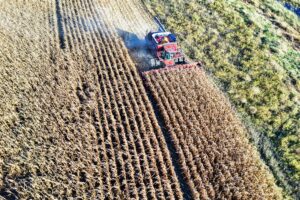
India is one of the largest agricultural producers on earth, and the sheer variety of what gets grown here is staggering. Rice in the river deltas of Bengal and the paddy fields of Tamil Nadu. Wheat across the flat plains of the north. Tea in the mist-covered hills of Darjeeling and Assam. Spices in Kerala that have been traded for centuries. Cotton, sugarcane, pulses, oilseeds the list goes on, shaped by a geography so varied that the country essentially contains multiple climates within its borders.
That diversity is a genuine strength. It means Indian agriculture isn’t a monoculture vulnerable to a single failure. It means regional food traditions are rooted in what the land actually produces. It means the country has built, over generations, a deep well of farming knowledge that is specific, local, and hard-won.
The revolution that saved millions and its complicated legacy
In the 1960s, India was in a precarious position. The population was growing faster than food production. Famines were a real possibility, not a historical memory. Then came the Green Revolution high-yielding seed varieties, chemical fertilizers, expanded irrigation and within a decade, the calculation changed. India went from importing food to producing enough to feed itself and export the surplus.
That achievement was remarkable. The people who drove it the scientists, the policymakers, the farmers who adopted unfamiliar methods under uncertain conditions deserve enormous credit.
But the long-term costs are real and they’re being paid now. Decades of intensive farming have depleted groundwater in Punjab and Haryana to alarming levels. Soil health in many of the most productive regions has deteriorated from years of chemical inputs. The varieties that were bred for yield rather than resilience are vulnerable to new pressures. The Green Revolution solved the problem it was designed to solve and created a different set of problems that the next generation has to navigate.
The farmer’s life, honestly
Here’s something that gets lost in policy discussions: farming in India is genuinely hard, and for many farmers, it isn’t providing a secure life.
The average Indian farm is small often just a couple of acres, fragmented across multiple plots. On that scale, the economics are brutal. Input costs seeds, fertilizers, pesticides, diesel for pumps have risen steadily. The prices farmers receive for their produce are subject to market swings that can wipe out a season’s work overnight. Storage infrastructure in many regions is inadequate, which means perishables either get sold immediately at whatever price the market offers, or they rot.
And then there’s the weather. A significant portion of Indian farmland is still rain-fed directly dependent on the monsoon in a way that makes every growing season feel like a negotiation with the sky. A good monsoon and everything works. A bad one, or a monsoon that arrives late or leaves early, and the consequences cascade quickly: failed crops, mounting debt, impossible choices.
The human cost of this precariousness has been visible and painful for years. Farmer suicides, particularly in Maharashtra, Telangana, and Karnataka, represent the most extreme expression of a distress that runs much wider families living close to the edge, taking on debt to finance each season’s planting, hoping the harvest will be enough to cover what they borrowed.
This isn’t a problem at the margins of Indian agriculture. It’s central to it. Any honest conversation about the sector’s future has to start here.
What technology is actually changing
The good news is that technology is beginning to reach farmers in ways that matter not just in press releases, but on the ground.
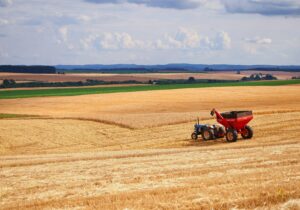
Mobile phones have been transformative in a way that’s easy to underestimate. A farmer who used to have no idea what his crop was selling for in the mandi three districts away now has that information in his pocket. Real-time weather forecasts that were once inaccessible are now a notification away. Crop advisory services delivered via WhatsApp are reaching farmers in languages they actually speak, with advice that’s specific to their region and their crop.
Drones are being used for spraying in some areas, reducing chemical usage and labor costs simultaneously. Satellite imaging helps identify stressed crops early. Soil testing services that used to require a trip to an agricultural university can now be done at a local service center or in some cases via a mobile kit.
The challenge with all of this is the same challenge it always is: reaching the farmers who need it most. The smallholder in a remote district with intermittent connectivity and no experience navigating digital platforms isn’t automatically served by a smartphone app, however well-designed. The technology exists. Getting it to work for everyone requires more than building it.
The organic farming question
There’s growing enthusiasm in government circles, in urban consumer markets, in international export opportunities for organic farming. And the underlying instinct is right: reducing dependence on chemical inputs, rebuilding soil health, producing food that’s genuinely better for people and the environment. All of that matters.
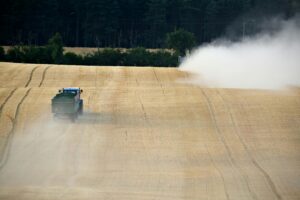
But the transition to organic farming is genuinely difficult for small farmers, and it deserves honest treatment rather than just enthusiasm. During the conversion period, yields typically drop before they stabilize. Farmers who are already operating on thin margins can’t easily absorb that transition without support. Organic certification processes can be complex and expensive. And the premium prices that make organic farming economically viable mostly exist in urban markets and export channels not always accessible to the farmer in a remote village.
Done right, with proper support and realistic timelines, organic farming can be part of a better future for Indian agriculture. Done carelessly mandated without support, or celebrated without accounting for the transition costs it can cause real harm. The difference is in the details of implementation.