
There’s a specific feeling that only happens in a movie theater. The lights go down. The chatter fades. The screen fills with something enormous and the sound wraps around you from every direction. For a couple of hours, you’re not in a seat in a building — you’re somewhere else entirely, and so is everyone around you. Strangers laughing together. Strangers crying together. That collective intake of breath when something unexpected happens on screen.
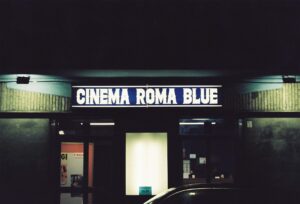
You can’t get that on your couch. Not really. And that’s ultimately what the future of cinema comes down to — whether the industry can hold onto that feeling, build around it, and give people enough reasons to leave the house.
The honest truth about streaming
Let’s not pretend the threat isn’t real. Netflix, Disney+, Amazon Prime — they’ve fundamentally changed the calculation for a lot of people. Why drive to a theater, pay for parking, buy overpriced popcorn, and sit next to a stranger who won’t stop checking their phone, when you can watch something great at home in your pajamas for a fraction of the cost?
For a huge category of films — mid-budget dramas, comedies, thrillers — streaming has basically won. These movies used to fill theaters on a Tuesday night. Now they go straight to a platform and people watch them on their laptops. That’s not going to reverse.
But here’s what streaming can’t do: it can’t make a film feel like an event. It can’t give you the experience of watching a Marvel film open on a Friday night with a thousand other fans who’ve been waiting months for this moment. It can’t replicate the way a horror movie actually frightens you when the sound design is engineered for a room that size. For certain films, seen in certain conditions, there is genuinely no substitute. The cinema industry’s job — and it’s a job they’re slowly figuring out — is to lean into that distinction as hard as possible.
Going bigger when home screens get bigger
The obvious response to competition from home viewing is to offer something home viewing can’t match. And to their credit, theaters have been investing in exactly that.
IMAX has moved well beyond a novelty. Dolby Cinema screens offer image and audio quality that genuinely feels different — not just better in a technical spec sheet way, but better in a way you feel in your chest. 4DX — the format with moving seats, wind effects, and various other sensory additions — sounds gimmicky until you’re actually in it watching a chase sequence and realize your whole body is involved in the experience.
These aren’t cheap options. But they’re not supposed to be. The pitch has shifted: going to the cinema isn’t a routine Tuesday night activity anymore. It’s an occasion. Something you do for the films that deserve it, in a way that treats the experience as something worth paying for.
That’s a defensible position. The question is whether it’s enough of one.
The cinema as more than a cinema
Some of the more interesting changes happening in the industry aren’t about movies at all. Theaters screening live sports. Concert events beamed to screens worldwide. Gaming tournaments. Stand-up specials. Award show watch parties.
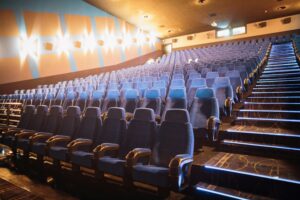
This diversification is smart because it addresses a fundamental problem — cinema attendance is inherently tied to what’s being released, and not every month has a blockbuster. A building with a massive screen and great sound is genuinely useful for more than just films, and operators are finally acting on that.
The luxury pivot is happening too. Recliner seats that feel more like armchairs. Full food and drink menus served to your seat. Private screening rooms you can book for a group. Some theaters are starting to feel less like cinemas and more like an evening out — closer to a restaurant experience than the old multiplex model. For audiences willing to pay for it, this works well. The challenge is that it prices out a significant portion of the potential audience and bets heavily on a premium segment that may not be large enough on its own.
The hybrid release headache
The pandemic forced studios into an experiment nobody had planned — releasing films simultaneously in theaters and on streaming platforms. Some of those experiments revealed something uncomfortable: for a lot of films, audiences were perfectly happy to wait and watch at home.
The industry is still figuring out what this means. The traditional theatrical window — the period when a film is only available in cinemas before moving to home release — has shrunk considerably and probably won’t fully recover. Some studios have settled into a tiered approach, reserving true theatrical exclusivity for their biggest films while moving smaller releases to hybrid or streaming-first models relatively quickly.
For cinemas, this is a genuine challenge. Their leverage depends partly on being the only place you can see new releases. As that window compresses, so does part of their value proposition. The response has to be doubling down on the experience itself — making the theatrical version of a film so superior that people choose the cinema even when the home option exists.
The films that still demand the big screen
Here’s what gets lost sometimes in the doom-and-gloom narrative about cinema’s decline: the biggest films are still performing. When a movie genuinely captures public imagination — a superhero saga, a visually spectacular epic, a horror film built around communal dread — people show up. Top Gun: Maverick. Oppenheimer. Avatar. These films didn’t just survive the streaming era; they thrived in spite of it, because audiences understood instinctively that some experiences belong in a theater.
The future of cinema might be a smaller, more curated version of its past — fewer screens, fewer mediocre releases filling the schedule, more intentional programming around films that genuinely deserve the format. That’s not necessarily a crisis. It might actually be a correction toward something healthier — a cinema culture that’s more discerning, more experiential, and more valued precisely because it’s no longer the default option for every new release.